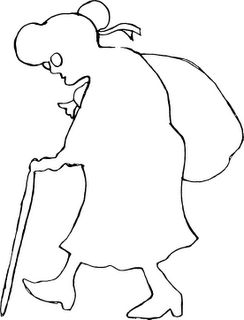
You are Proverbs.
Which book of the Bible are you?
brought to you by Quizilla
Gotta say, though, this doesn't strike me as wrong. Whatever that means.
Friday, October 14, 2005
Right. Now I'm Proverbs
Thanks so much, Dash, for pointing me to Which Book of the Bible are you?
At least you can't claim this one's rigged! (Unlike the Peanuts one.)
You are Proverbs.
Which book of the Bible are you?
brought to you by Quizilla
Gotta say, though, this doesn't strike me as wrong. Whatever that means.
You are Proverbs.
Which book of the Bible are you?
brought to you by Quizilla
Gotta say, though, this doesn't strike me as wrong. Whatever that means.


Monday, October 10, 2005
And now I'm Rerun...
Courtesy of LutheranChik
Not that I'm a huge Peanuts fan, but here I am:
 You are Rerun!
Which Peanuts Character are You?
brought to you by
You are Rerun!
Which Peanuts Character are You?
brought to you by
Wednesday, October 05, 2005
Happy Birthday, Mom
Today would have been my mother’s 82nd birthday. She died 14 years ago, way too soon. And I thought today, as I often have, of things I wish I’d known about her before she died.
After her death, I learned the following from the woman I studied piano with from 5th grade through high school. (She and my mom had gotten to be friends, but I didn’t know more than that.) My piano teacher lived miles out of town, and didn’t have a washer, much less a dryer—but she had a toddler, before disposable diapers. So Mom would drive over (we were a couple of miles on the other side of town), pick her up and bring her to the town’s laundromat. I guess that was during the school day.
At the funeral, so many people I didn’t know came over to tell me how much they would miss Mom. She had been intensely involved in politics, Farm Bureau and the Solörlag (organization of descendants of immigrants from Solör, in Norway), and had served as the March of Dimes’ county chapter Executive Director. It was clear that she had touched people’s lives in many ways.
I wish I had known. I wish she had known.
She died horribly from cancer, which I didn’t know she had until ten days before she died. It had metastisized to her bones. Only Dad knew, and it was something they dealt with in the usual way—avoiding it until way too late. That colored everything so that it was hard to remember, let alone think about, the mother I loved.
A Lutheran pastor my parents knew from the Solörlag delivered the eulogy at her funeral. He gave my mother back to me, retrieved her from the horrible, dark place of “why didn’t she tell us—tell me.” He recounted how she so loved unexpectedly meeting up with previously unknown relatives (it did happen rather often—at Mt. Rainier she struck up a conversation with another person only to discover the connection). The pastor imagined her in Heaven, joyfully going from one relative to the next, catching up. Yes. And when she laughed, it was with her whole being. Wiping tears from her eyes. At least I had that with her, but the circumstances of her death had obscured my memories of shared glee. I’ll forever be grateful to Pastor Grefsrud for this tremendous gift.
Maybe this is something you had to be there to understand, but when I was young, Mom and I had blowing contests. We’d see who could “outblow” the other—in the face. Guess halitosis or spittle wasn’t an issue. She’d fake holding in a huge breath, with the funniest expression on her face, and I’d burst out laughing—and lose the contest. I can’t recall ever winning, but the laughter was payoff for winner and loser alike.
And her love of meeting relatives rubbed off on me in at least a small way. After the funeral, a number of us gathered at her sister’s home, and I kept on feeling the impulse to call and tell her all about it. So many people she would have loved to talk to.
I still miss you, Mom.
Friday, September 30, 2005
Perceptions while profiling
I’ve been pondering something I witnessed a couple of nights ago by my place. These were my observations that night:
Several young adult African-American males walk down the street. An unmarked police car pulls into the alley near them; one of the cops yells, “Over here.” The young men all immediately approach the nearest car, arms up and mostly in front, and they place their hands on the car, spread-eagled. The two cops frisk them all, one by one. No struggle or audible protests from the young men. I’m too far away to hear any conversation, but it goes on for awhile. I don’t know when the police left. An hour or so later, five of the young men have recongregated kitty-corner from my building (if there were more initially, I can’t be sure). They’re talking, then they split up; three head the other way, the other two get into a nearby car. I hear this repeatedly from one of the two: “I don’t need no gun.”I tried to write the above as neutrally as possible, and realized how difficult it was. Is it possible to be a clear, dispassionate observer? Even the details I noticed were likely influenced by my biases, conscious or not. Shedding prejudice is a rigorous activity. Thoughts running through my mind simultaneously: “Had the cops received a crime report?” “Were they patrolling and believed that more than one young African-American male walking down the street was cause for investigation? I’m also trying to profile the cops. If any of the young men had been carrying a gun, he would have been arrested (Chicago has a gun ban) and there’s no way any could have been back on the streets so soon. I didn’t feel the need to seek cover. Influences on my perceptions and thinking: 1) I’ve noticed an increase in police patrols in my area. On the one hand, it should make me feel safer, but on the other, I wonder what it signals. Are they only now taking notice of something that may have been going on all along? Or are the seemingly stepped-up patrols an indication of growing problems in the area? 2) More than a year ago, I noticed a group of young people gathering frequently outside the building across the street. On one occasion, it looked an awful lot like gang activity (guys repeatedly driving by, hanging out the car windows thighs on up and hollering at the more than 20 people hanging out on the sidewalk and alley—they were clearly looking for someone and both they and the group sounded hostile). I called the cops. I haven’t seen anything like it since a week or two after that incident, but what does that mean? Did the person(s) at whose place they were congregating move? (The building is rental units, not condos—and of course the perception is that gang members wouldn’t be owners.) Or were the aggressors neutralized? 3) I absolutely believe that unjust racial profiling occurs. Even though I know that the other extreme, stopping an old Scandinavian grandmother from boarding an airplane for carrying banned articles, in an effort to be “fair and impartial” would be just plain absurd. (Justice is blind, after all, right?) To date there have been no Norwegian suicide bombers. But “Driving While Black,” even “Walking While Black” is an “offense” that seems to occur disturbingly often. 4) One of my brothers was particularly delinquent in his youth, and on more than one occasion I happened to drive by his car (it was a small town), pulled over by a cop who was just checking to see what he was up to. Once he had gotten the cops’ attention they kept close tabs on him, and he preferred to believe that they had it in for him. It was easier to get into the finer points of cops of German ancestry “harassing” an idiot of Norwegian ancestry (the town and nearly the entire county then was Caucasian, so racial profiling had to be taken to a much lower level). Not all scrutiny is unearned. But zeal is particularly susceptible to blinders.
Sunday, September 25, 2005
Hurricane reflections
I lived in Houston from 1985–1987, and in 1986 Hurricane Bonnie threatened our area. As I researched it (my memory of it is poor) I discovered that it was at most a Category 1 hurricane, and upon making landfall was downgraded to tropical storm.
Still, we had our warnings, which back then consisted of: stock up on batteries, water, nonperishable food and candles, and criss-cross tape your windows so that if they break, they won’t shatter all over your place. (And if you’re really ambitious, board up your windows.)
We lived in the Heights, so flooding was not an issue, but we would still have been vulnerable to high winds and possible tornadoes. We went to bed that night not knowing what we’d see in the morning (I confess we didn’t do the window thing) and discovered the storm had veered northeast on nearly the path Rita took.
I never fully understood what torrential rains were until I saw the aftermath. Two days plus of a solid wall of water coming down. And of course, the city’s seven bayous overflowed, which they do in “regular” thunderstorms.
As my ex-father-in-law still lives in Houston, and I’m still reeling over the emotional impact of Katrina (even from my safe distance), I did watch Rita with concern. My ex-FIL had planned to evacuate, but when he and his neighbors saw the impossible traffic jams, they decided they’d best just hunker down (he did board up his windows). He’s not in an area prone to flooding, so it was a better choice than getting caught on the highway.
It’s nearly impossible to get around Houston without a car. Public transit? I’m still not sure it exists there. And on the best of days, Houston’s “rush hour” runs from early morning to early evening. Even with the reasonable advance warning that was heeded, there’s no way all those people could get out. Houston is the nation’s fourth most populous city. (I’ve witnessed a million people trying to get out of downtown Chicago following July 3rd fireworks, so I’m even less convinced that Chicago could evacuate in any imminent disaster—though we don’t have to fear hurricanes, thankfully.)
Comparing Rita to Katrina seems like comparing the proverbial apples to oranges—and not just because of the storm strength.
In Rita we had a potential disaster that was taken seriously because of Katrina’s lessons, even though the lessons are somewhat different. New Orleans and Houston are different in a number of ways. The economic bases are different (New Orleans’ base is tourist/entertainment, which requires a ready pool of the hardworking poor), though both still are vulnerable to catastrophic storms. But in terms of potential loss of human life, Houston has the advantage. More people had the means to protect themselves and the geographic advantage of being far enough inland that storms are more likely to lessen in intensity before hitting.
The people outside those two cities will likely be quickly forgotten—no solid entity or identity that allows people to remember—even though their losses are as complete as many of those in the two cities (especially New Orleans) that we can so easily pigeonhole.
Sins of the parents
Bemused at Blogging through the Bible has noted the constant theme of children paying for their parents’ sins (she’s nearly through II Kings now), and I have found it as perplexing and disheartening as she does. However, theology does shift in the Old Testament, though it’s a detail that escapes most people’s notice. The Lectionary for today includes Ezekiel 18, which provides an uplifting preview:
Ezek 18:1 (NRSV) The word of the LORD came to me: 2 What do you mean by repeating this proverb concerning the land of Israel, “The parents have eaten sour grapes, and the children’s teeth are set on edge”? 3 As I live, says the Lord GOD, this proverb shall no more be used by you in Israel. 4 Know that all lives are mine; the life of the parent as well as the life of the child is mine: it is only the person who sins that shall die.Read the remainder of the lesson here (scroll down to the section for ECUSA).
Wednesday, September 21, 2005
Messy community
Dave at The Grace Pages talks about churches trying to offer something for everybody by segregating them ("ghettoization" he calls it). I found his comments a welcome antidote to the solutions presented by Episcopal Church "experts" on growing churches (which I might address sometime, if I can raise the stamina to do so) to my former parish. (Former parish's mission was pretty near "Grow or die.")
Tuesday, September 20, 2005
Jesus is…
I don’t know who wrote this—it came via e-mail—but I find it wonderfully thought-provoking enough to share:
There were 3 good arguments that Jesus was Black:
1. He called everyone brother.
2. He liked Gospel.
3. He couldn't get a fair trial.
But then there were 3 equally good arguments that Jesus was Jewish:
1. He went into His Father's business.
2. He lived at home until he was 33.
3. He was sure his Mother was a virgin and his Mother was sure He was God.
But then there were 3 equally good arguments that Jesus was Italian:
1. He talked with His hands
2. He had wine with His meals.
3. He used olive oil.
But then there were 3 equally good arguments that Jesus was a Californian:
1. He never cut His hair.
2. He walked around barefoot all the time.
3. He started a new religion.
But then there were 3 equally good arguments that Jesus was an American Indian
1. He was at peace with nature.
2. He ate a lot of fish.
3. He talked about the Great Spirit.
But then there were 3 equally good arguments that Jesus was Irish:
1. He never got married.
2. He was always telling stories.
3. He loved green pastures.
But the most compelling evidence of all—3 proofs that Jesus was a woman:
1. He fed a crowd at a moment's notice when there was no food.
2. He kept trying to get a message across to a bunch of men who just didn't get it.
3. And even when He was dead, He had to get up because there was work to do.
AMEN
Saturday, September 17, 2005
Not for Catholics only
This has made the e-mail rounds, but as I know all three of my readers enjoy church jokes, I thought I would share this way. And in my experience, "Episcopalian" could substitute for "Catholic."
--------
This information is for Catholics only. It must not be divulged to non-Catholics. The less they know about our rituals and code words, the better off they are.
AMEN: The only part of a prayer that everyone knows.
BULLETIN: Your receipt for attending Mass.
CHOIR: A group of people whose singing allows the rest of the Parish to lip-sync.
HOLY WATER: A liquid whose chemical formula is H2OLY.
HYMN: A song of praise usually sung in a key three octaves higher than that of the congregation's range.
RECESSIONAL HYMN: The last song at Mass often sung a little more quietly, since most of the people have already left.
INCENSE: Holy Smoke!
JESUITS: An order of priests known for their ability to found colleges with good basketball teams.
JONAH: The original "Jaws" story.
JUSTICE: When kids have kids of their own.
KYRIE ELEISON: The only Greek words that most Catholics can recognize besides gyros and baklava.
MAGI: The most famous trio to attend a baby shower.
MANGER: Where Mary gave birth to Jesus because Joseph wasn't covered by an HMO. (The Bible's way of showing us that holiday travel has always been rough.)
PEW: A medieval torture device still found in Catholic churches.
PROCESSION: The ceremonial formation at the beginning of Mass consisting of altar servers, the celebrant, and late parishioners looking for seats.
RECESSIONAL: The ceremonial procession at the conclusion of Mass led by parishioners trying to beat the crowd to the parking lot.
RELICS: People who have been going to Mass for so long, they actually know when to sit, kneel, and stand.
TEN COMMANDMENTS: The most important 'Top Ten' list not given by David Letterman.
USHERS: The only people in the parish who don't know the seating capacity of a pew.
Tuesday, September 13, 2005
Huh. I'm St. Francis of Assisi
Thanks to LutheranChik's pointing, I now know that if I were to be a saint (hah!) I'd be Francis.
 You are Saint Francis of Assisi! You don't care
what you look like (or smell like) as long as
you can live simply and help the poor. You
should be receiving your stigmata any day now.
Which Saint Are You?
brought to you by Quizilla
Well. I will be pondering this. I do kinda care about smelling.
You are Saint Francis of Assisi! You don't care
what you look like (or smell like) as long as
you can live simply and help the poor. You
should be receiving your stigmata any day now.
Which Saint Are You?
brought to you by Quizilla
Well. I will be pondering this. I do kinda care about smelling.
Thursday, September 08, 2005
Measuring loss
If the rich and the destitute lose all their material possessions, whose loss is greater?
I’m asking the question because of recent remarks by Barbara Bush (noted here, here, and here) about displaced people from New Orleans being sheltered in Texas. She seems to be clueless as to what it’s like to walk in those shoes, with the apparent conclusion that if one loses what little one has, the loss is little.
I think of “The Widow’s Offering,” from Mark 12:41-44:
[Jesus] sat down opposite the treasury, and watched the crowd putting money into the treasury. Many rich people put in large sums. A poor widow came and put in two small copper coins, which are worth a penny, Then he called his disciples and said to them, “Truly I tell you, this poor widow has put in more than all those who are contributing to the treasury. For all of them have contributed out of their abundance; but she out of her poverty has put in everything she had, all she had to live on.”New Revised Standard Version
Sunday, September 04, 2005
The Tie Goes to the Poor
There's a rule in baseball that I like a lot: the tie goes to the runner.
I think there should be a rule like that in life. If there's a conflict between someone with power and someone without, the one without power should prevail.
Sunday, August 28, 2005
So what’s wrong with a feminized Christianity?
Dash reports on a speaker she heard, who noted that “for about a century now religion has been becoming more and more feminized, that is, more oriented toward women,” along with raising the question of what it would take to get more males (young and otherwise) involved in church.
I lay that alongside something from John Dominic Crossan:
…we sometimes talk about the public spaces belonging to men and the private ones to women in the ancient world. And, of course, public is much more important than private! Rose-Gaier quotes this comment by the Jewish philosopher Philo of Alexandria (citing Yonge 611): “There are two kinds of states, the greater and the smaller. And the larger ones are called really cities; but the smaller ones are called houses. And the superintendence and management of these is allotted to the two sexes separately; the men having the government of the greater, which government is called a polity; and the women that of the smaller, which is called oeconomy.” (Special Laws 3.170) That puts men in charge of “politics” and running the government and women in charge of “economics” and running the household. But earliest Christianity was far more involved with the household than with the government. Whether it liked it or not, therefore, women were extremely important in its organizational basis in house-based communities and house-based churches. It was a question of authority and power. At later stages, as Christianity moved more and more into the public and governmental sphere, men had actively to retake such control from women. Women, as Luke 10:38–42 put it, should passively listen like Mary rather than actively administer like Martha.Crossan, The Birth of Christianity [HarperSanFrancisco paperback, p. 372] (First, the last sentence—an utterly provocative take on Mary’s and Martha’s roles, different from any I’ve ever heard—makes sense in the context Crossan has carefully provided in the book, drawing from historical, anthropological, literary, etc. disciplines.) I can’t help but wonder if the Church’s descent from near-absolute power has lessened its appeal for men who might otherwise “join up.” The sacrificial message of the Kingdom of God, as embodied in Jesus, has little or nothing to do with power, especially in our highly political world.
Saturday, August 06, 2005
Dialogues on democracy and terror
“Two weeks after the London bombings, openDemocracy and Q-News convened a meeting at London’s Chatham House to debate the origins and consequences of the attacks and let Muslims and non-Muslims thrash out the issues.” View article at openDemocracy—free thinking for the world. I especially like the tag line “Nobody pulls our strings”—I hope that’s true. (Via Ray at Minor Wisdom and Faraz Rabbani at Seeker’s Digest.)
Saturday, July 30, 2005
Simplicity and Challenge
I’m attempting to organize some of my utterly hyperlinked thoughts (my brain tends to work rather like the Internet, and an orderly line of reasoning comes with great difficulty). As one of the tasks of writing is to organize one’s thinking, here goes. Perhaps some of you will be kind enough to let me know if I’m making progress.
First, the anecdote that helped me to frame one particular issue: A couple of nights ago, I was part of another conversation, where the story was told of the [Espicopal] diocese’s Assistant Bishop’s (A.B.) attendance at a vestry meeting. He was questioned rather strongly about his vote in support of the ordination of homosexuals (I presume the vote to confirm V. Gene Robinson as Bishop of New Hampshire). The A.B. was quoted as saying something along the lines of “The New Testament changed the Old Testament, and now we change the New Testament.” To which the response was, “You are not God.”
It reminds me of Lloyd Bentsen’s remark to Dan Quayle in a vice presidential candidate debate, “Senator, you’re no Jack Kennedy.”
Whether I agreed with the A.B.’s vote, I would have been insulted by such a simplistic and, I believe, misleading explanation for what is a difficult, complex process. It sounds downright condescending. If what I’ve related is a fair representation of what he said, he deserved the answer he received.
As I know how much my thinking has changed over the past 20 years (going from no thinking to probably too much), I think the A.B. absolutely lost an opportunity for fruitful discussion. He certainly lost any respect or forbearance that the vestry may have retained for him following his vote.
Because of numerous interactions like the preceding, I’ve been quite interested of late in the history of the earliest Church.
The major spark was Garry Wills’ “Papal Sins: Structures of Deceit,” in which he traces the impact of personalities (I would say personality disorders, based on descriptions of several Popes’ actions) and politics on the doctrine of the Catholic Church over the past couple of centuries. Wills skillfully utilizes incidents from more ancient history to illuminate dubious decisions of the Magisterium. He is an historian who makes the past come alive, and he lays out some startling information, which is too big to do other than mention in this post.
In brief: One of his assertions—evidence for which comes from secular Roman historians, not church writings—is that even the earliest Church had a serious split. Some believers were betrayed to Roman authorities by believers with whom the rift occurred, and it’s one plausible explanation for the deaths of Peter and Paul (about which the N.T. is silent). So much for my thoughts on early Church unity.
Several other points that have spurred me on to further reading: 1) there were no priests in the New Testament; 2) the earliest priests were not ordained by a central authority, answerable to a hierarchy, but were ordained by the community of believers in which they lived; 3) considerable evidence suggests that women were equal to men in the earliest Church, and held such positions of authority as existed. The last point I’d heard before, but Wills provides convincing argument.
I can’t say I’m simply advocating a return to Church as practiced by the earliest Christians, for several reasons. One is that changes that were made had to have been meaningful to the community that made them, and it’s disrespectful and kind of stupid to throw out tradition simply because it’s revealed to be quite different from predecessor tradition. Mostly it’s that I want to understand the dynamics of changes as they occurred. Who, what, when, where, why?
Throughout the Church’s history, besides the likelihood of personality-disordered believers sometimes gaining the upper hand (they were human after all!), choices were made based on the information at hand. Thanks to archeological discoveries, scholars today know a lot more about the earliest Church than did anybody in the intervening centuries. That helps us understand the nature of changes that were made, and perhaps we gain a new understanding of and respect for the resulting tradition. Or, we realize that they did the best they could with what they had, and those changes are no longer necessary to uphold.
I next turned to John Dominick Crossan’s “The Birth of Christianity.” It’s been sitting on my bookshelf for years, but I no longer find it intimidating (it’s 653 pages including appendices, bibliography, and indices). Though I must confess I’ve been at it for two weeks and am only a third of the way through—all I can absorb of it in a day is about 40 minutes’ worth.
If I were marketing this book, I’d call it a Classroom in a Book. Or, a Seminar in a Book. I’m pondering blogging through it after I finish slogging through it. He writes very clearly and methodically, but it’s slow going simply because he provides meticulous definitions of terms and concepts that either have been used sloppily or I simply haven’t known, as he uses a multi-disciplinary approach to the topic. There’s a LOT to ponder. However, I much prefer his respectful, caring, honest approach, as contrasted with the glib sound bite of the Assistant Bishop in the anecdote at the beginning of this post.
Crossan provides his definition of history: “History is the past reconstructed interactively by the present through argued evidence in public discourse.” Whew.
I take a major risk in trying to distill the 28 pages of Chapter 2: Reconstructing Earliest Christianity, but as my understanding has been deepened tremendously by them and my search fueled further, here I go, mindful of the dangers of oversimplification.
Why reconstruct (he prefers that term to “search” or “quest”)? Every generation needs to engage with the historical Jesus as best it can. It is not a task that is done, once and for all (though it would be much easier if that were true).
Historical reconstruction is always interactive of present and past. Even our best theories and methods are still our best ones. They are all dated and doomed not just when they are wrong but even (and especially) when they are right. They need, when anything important is involved, to be done over and over again. That does not make history worthless. We ourselves are also dated and doomed, but that does not make life worthless. It just makes death inevitable.Crossan, p. 43 I can well imagine that millions of people would respond much like this commenter on a related topic at Blogging through the Bible in this post:
You know what, I don’t think this [blog] is the place for me. It’s my own fault, really. But in all honesty, I don’t want to waste my time debating the authenticity of the Bible. He said it...that settles it. Whether I or anybody else believes it...doesn’t really matter.”[Ellipses in original] Well, I can relate to that thinking, as it used to be mine as well. What gets people beyond that? An ability to leave one’s comfort zone—a willingness to encounter challenge. If the challenge turns out to be unfounded, one learns from that. If the challenge results in enlightenment and growth—yes, deepened faith—we all benefit.
Thursday, July 14, 2005
Liturgy and Preachers and Dreams…
…oh my!
I have lots of weird dreams, and most of them don’t mean anything. But as I’ve been trying hard to process where I am in light of recent and current discussions at Dash’s and Dwight’s blogs, I don’t doubt that Tuesday night’s dream was my brain working overtime.
I found myself in the Lutheran church where I was confirmed, with Dash and her mother (they’ve never been there), a collection of people I knew then, and the pastor who confirmed me. They were in the middle of a service, with a different pastor presiding. My old pastor was assisting, but when he saw me, he came right over and we had a great big hug. It was so good to see him! I realized that it was disruptive, but I hoped nobody would mind too much.
I can’t remember too much of the service itself (how high, how low) but I do remember wondering if Dash would like it. I neither liked nor disliked the service itself—I realized I was focused most on the reunions with people I haven’t seen in more than 20 years.
The biggest change in that church (besides having a new pastor) were a curious and creative (and impossible!) solution to sharing worship space. The church had been altered quite a bit, so that the rear of the nave was now a detachable chapel, which is where the service had been held. I think it was on a weekday, not the main Sunday a.m. service.
Immediately following the service, preparations were made to detach the chapel and move it several miles away to attach it to a Catholic church. It appeared to be mounted on some sort of track, and we gathered in the chapel for the trip to its other “station.”
Once we arrived at the Catholic church, the chapel locked into place (too many science fiction movies, I guess) with some sort of connecting wall to be opened into the church. Those on the other side had not only assembled already, but apparently hadn’t waited for preparations/reorganizing of the chapel’s “furniture,” and their Mass was in progress.
So Dash and her mom opened a door in the wall to duck into the Mass, and I could see it was almost completely dark in there. They looked at me to wonder if I was coming as well, but I was rather undecided. Why? I thought. I’m familiar with all this. No reason I couldn’t.
But I didn’t.
Some of this seems quite obvious, and almost literal. The pieces that are specific to me, however, I find difficult to articulate. As I’m still on sabbatical from organized religion, I know I’m in the middle of some paradigm shift, and I don’t know yet where I’ll land.
I know that the issues being aired: who joins with whom, how they join, how those decisions are made and by whom, are precisely why I’m outside the church (any church) right now. This is me, the Bag Lady, standing on the corner, the intersection of a number of viewpoints, watching and wondering, seemingly unable to find my voice to join the conversation. All viewpoints claim to hold to “The Truth,” which more or less preempts anybody outside that viewpoint.
This is obviously a much bigger topic than 1) I can organize neatly and 2) would be of an appropriate length for the medium. So I will continue in a future post.
Tuesday, July 12, 2005
Situation hits home
On my way home from the Loop after work, we all had to get off the el at the Sedgwick stop and catch another train. As the train hadn’t given any appearance of malfunction (doors refusing to close, stopping between stops for no apparent reason, etc.) my brain got going: I thought, there’s been a bomb threat.
Yes. The Chicago Tribune reports that the Purple Line was shut down because of a threat.
Now, the Purple Line is the lowest-volume line of the CTA (only 14,000 riders a day), but as it serves people going from Evanston to the Loop, it’s more of a symbol. It wouldn’t cause the severe damage and loss of life that a bomb on the Red Line would, but a lot of people who ride the Purple Line live on Chicago’s North Shore, primarily Evanston and Wilmette. Either a crackpot out there has something against the North Shore (which narrows it down to several thousand people) or a crackpot thought that people who are perceived as wealthy and powerful make a worthwhile target.
What scares me (immediate danger having passed) is that what I suspected was correct. Man, I’m not in the boondocks anymore (well, haven’t been for 24+ years).
Sunday, July 10, 2005
Eureka in my world (and welcome to it)
Friday I made what was, for me, an amazing discovery: My body can, in fact, produce the much-lauded endorphins after physical exercise. To make sure, I tested it out again yesterday, and yup! I’ve got those lovely little brain chemicals.
How did this discovery elude me for decades? Running was no help—I never got any “runner’s high,” probably because I never lasted long enough to trigger those little buggers, always simply collapsing.
I’ve never displayed much physical prowess—while I do have fast reflexes (and they pay off big time when playing piano) they don’t translate into running speed. Races in “physical education” (I didn’t learn a whole lot there) were a matter of torture, and back then it was all a matter of being the best. As I wasn’t even close to the best, I never experienced any rewards simply for moving.
I have understood (intellectually, anyway) that some people enjoy physical activity just for its own sake. That enjoyment probably is a significant motivator for staying in shape, whereas my only motivation was negative—trying to pull on jeans that no longer fit.
Well, I had enjoyed riding my bike, though I hadn’t done that for more than three years, as my bike was mishandled by the movers during my last move and I didn’t have any bike maintenance know-how. Without a vehicle to transport it to the nearest bike repair shop, I periodically attempted to put it back in order and gave up in frustration.
My bicycle repair manual is very detailed, but it still stymied me somewhat. If I had known how certain parts of my bike assembly looked before they were thrown out of whack, it would have been easier to translate the instructions (and photos) into reality.
But Friday was such a perfect day to be outside that I attempted repair once more. This time I succeeded! (At least the brakes appear to be working properly, and nothing else seems to be awry.)
So off I went, on one of my favorite rides. There’s a lovely bike and running path through a sculpture park situated (unfortunately) alongside Chicago’s sanitary canal. Getting to the beginning of the path is a challenge, as it requires riding along one of Chicago’s crazy, biker-hostile streets before reaching the water treatment plant near the sanitary canal. Scary and smelly!
After that point, all is good. Both days I rode for about an hour, returning to collapse not in agony, but in a quiet, good tiredness. And then I realized my brain’s chemical soup was bubbling happily. Ah, yes! Like the effect of a good beer without the somebody’s-sitting-on-my-head part.
Now that I know what it is (and my muscles are telling me that they’ve been worked but they’re not giving me hell about it) I’m looking forward to more.
Perhaps I’ll discover a bit more wisdom (and ditch some of the madness). Next plan: eat lotsa fish.
Saturday, June 25, 2005
So who else is Catholic?
My long-intended follow-up to this has been delayed mostly by clumsy attempts to understand the issues facing Catholic dissenters. It also seems somewhat presumptuous, as I’m not Catholic—what can an outsider know and feel? But because the Anglican Communion has been in conversation with Rome for quite some time, exploring common ground (raising some Anglicans’ hopes for reunification), it does concern me.
Garry Wills in “Papal Sin: Structures of Deceit” has nailed one piece I’ve been struggling with:
…why do not all the Catholics who disagree with the Pope just get out?… Who am I—or who is anyone except the Pope—to decide what a Catholic may or may not accept as binding doctrine? …the question is based on an assumption that is not only challengeable but extremely unhealthy. It assumes that the whole test of Catholicism, the essence of the faith, is submission to the Pope… It is not a position that has a solid body of theology behind it, no matter how common it is as a popular notion… [p. 6]I have a number of friends who are active Catholics, who disagree with much of Church teaching on ordination, gays, birth control—basically the big, hot buttons. So long as they remain an indistinguishable part of the flock, neither occupying leadership positions in the Church nor serving as elected government officials, little will happen to them. It’s priests who would rise in the hierarchy, theologians who teach in Catholic institutions, writers who publish under Church imprimatur, and politicians whose votes are a matter of public record who are vulnerable to being silenced.
Sunday, June 12, 2005
Returning to letting go
Today was the first time since September 28, 2003 that I’ve attended a Sunday morning Eucharist in an Episcopal church. It is only the third time I’ve received the Eucharist in an Episcopal church during my sabbatical, the previous times having been at funerals this year. It’s about the fourth time I’ve attended church on a Sunday morning, the other times being a visitor at my friend Dash’s Lutheran church about 600 miles from here.
The Gospel for today [Matt. 9:35–10:8; Jesus sends out the disciples to proclaim the Gospel] is one that has been in the back of my mind for several years now; first, when considering leaving my former parish, and then throughout the extended leaving process.
The last verse included by the lectionary compares the fate of unreceptive houses and towns with that of Sodom and Gomorrah. So the preceding verse, which instructs the disciples to shake the town’s dust off their sandals, has always seemed an inextricable part of a curse—“I shake your dust off my sandals, you—you—you bad, bad people!” (with emphatic fist-shaking, if the dust is all off).
Maybe a year ago or more, a different possibility was posed for me (I wish I could remember by whom). Shaking the dust off one’s sandals makes a lot of sense from a psychological standpoint: if one concludes that one’s actions are of no use, it’s best to let go of the situation. Even the dust is excess baggage. Move on.
With that in mind, I’d resolved to not harbor bitterness over my former parish. In a situation where I’d actually had the chance to make a difference but failed, I did at least come to an understanding of the problem. That helped an awful lot in letting go—I’m not sure where I’d be now without that understanding.
The church I attended this morning is one where a friend of mine (a fellow refugee from my old parish) has “landed.” I will probably also begin to check out a couple of others in which I’ve been interested.
As I’m still pondering some theological concerns (about which I haven’t even begun to blog), it’s impossible to know where I’ll end up. It would be nice if I’d shaken all the dust off, but I guess I haven’t finished, as I’m still somewhat numb.
Subscribe to:
Posts (Atom)